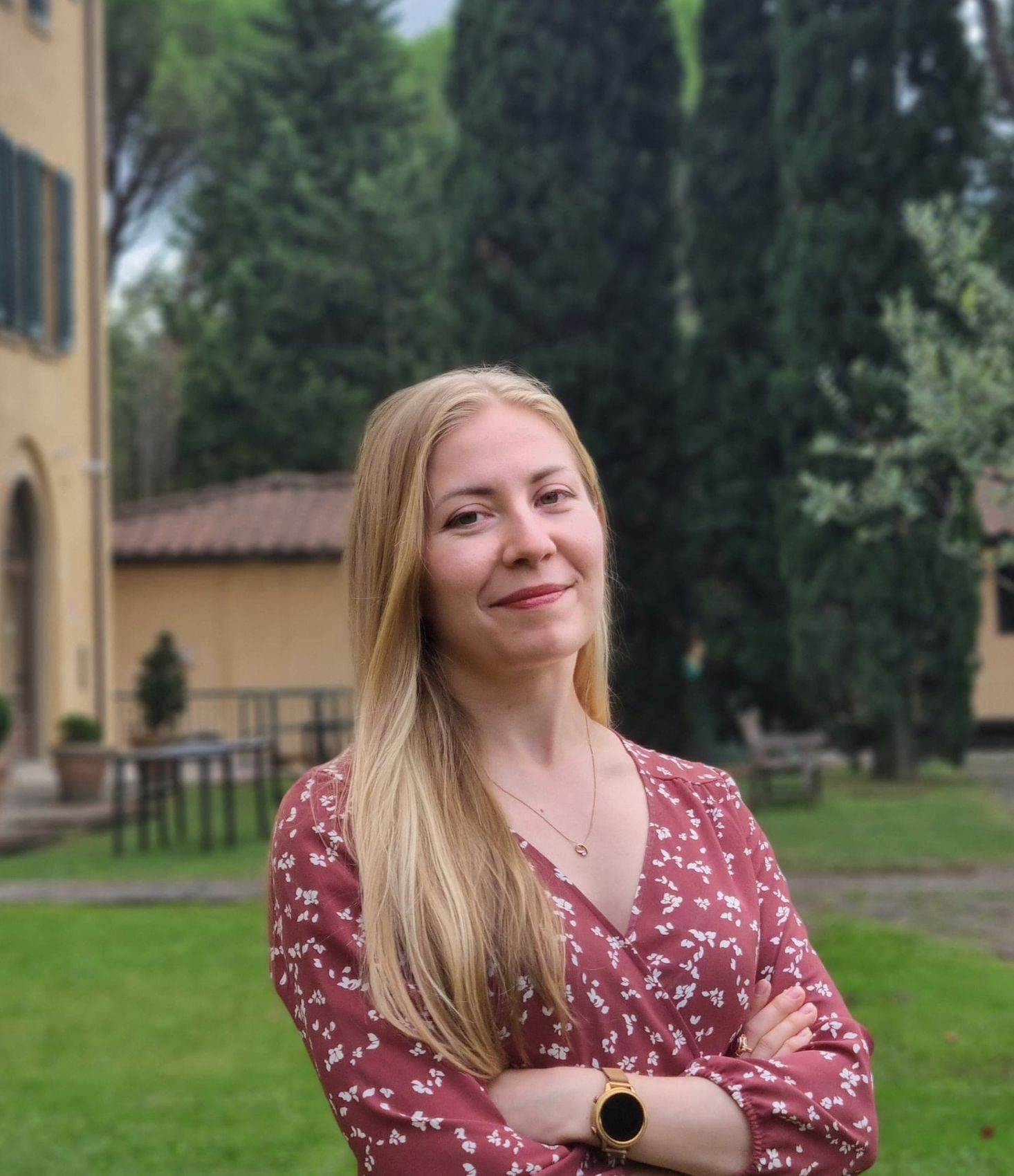
Eleonora Minaeva
PhD Researcher in Political Science at the European University Institute
About Me
I am a political scientist studying autocracies, governance, and public attitudes. My work combines cross-national analyses of authoritarian institutions, elite strategies, and institutional reforms with in-depth subnational research on post-Soviet countries.
Methodologically, I combine quantitative and qualitative approaches, including causal inference with observational data, quasi-experimental designs, survey experiments, qualitative interviews, and comparative case studies.
I am a Doctoral Researcher at the European University Institute, and a former Visiting Scholar at the Institute for European, Russian and Eurasian Studies (IERES) at George Washington University.
I am currently on the job market and open to academic, policy-oriented, and applied research positions.
Peer-Reviewed Publications
- Serebrennikov, D., Minaeva, E. & Ross, S. (2026). Surveillance as Governance: Policing Effectiveness and Political Control in the Moscow AI Experiment. Forthcoming in Russian Politics.
- Kostelka, F., … Minaeva, E. … (2026). Mass Attitudes towards Russia’s Aggression against Ukraine: Tentative Support for Top-Down Opinion Formation. European Journal of Political Research. Download
- Bederson, V., & Minaeva, E. (2024). “We’ll Find a Way to Settle This Among Ourselves”: Conditions for the Centralization of Municipal Powers in Urban Development. Russian Sociological Review, 23(2), 67–89. DOI: 10.17323/1728-192x-2024-2-67-89.
- Semenov, A., & Minaeva, E. (2024). Mobilizational Momentum and Electoral Results of “Party in Power”. Politeia, 1(112), 77–97. DOI: 10.30570/2078-5089-2024-112-1-77-97.
- Minaeva, E., Rumiantseva, A & Zavadskaya, M. (2023). From local elections to appointments: How has municipal reform changed vote delivery in Russian municipalities? Electoral Studies, Vol. 85, DOI: 10.1016/j.electstud.2023.102657.
- Minaeva, E. & Panov, P. (2023). Dense Networks, Ethnic Minorities, and Electoral Mobilization in Contemporary Russia. Problems of Post-Communism, DOI: 10.1080/10758216.2021.1974885.
- Minaeva, E. (2022). Strategies for the Preservation and Cancellation of the Direct Election of Municipal Heads in Russia. Universe of Russia. Sociology. Ethnology, Vol. 31, Issue 2: 97-117.
- Minaeva, E. & Panov, P. (2020). Localization of Ethnic Groups in the Regions as a Factor of Cross-Regional Variations in Voting for United Russia. Russian Politics: 131-153. DOI: 10.30965/24518921-00502001.
- Minaeva, E. & Semenov, A. (2020). The Cities of Forking Streets: Trajectories of Urban Conflicts in Russia. The Journal of Social Policy Studies, Vol. 19, Issue 2: 189-204.
- Minaeva, E. & Semenov, A. (2020). Policy Transfer in Urban Governance: The Case of Strategic Urban Planning in Russia. Ars Administrandi, Vol. 1: 120-136.
- Minaeva, E. & Panov, P. (2017). Ethnic Regional Autonomies: Variation of the Correlation Between Sub-State Boundaries and Ethnic Groups’ Settlements. Political Science, Vol. 4: 178-205.
- Minaeva, E. (2016) Urban Settlement Versus Municipal District» in the Context of Vertical Power Structure: Polycentricity in Local Politicy. Bulletin of Perm University. Political Science, Vol. 1: 83-96.
Book Chapters
- Minaeva, E. (2023). Policy Activism in Urban Governance: The Case of Master Plan Development in Perm. In Jeremy Morris, Andrei Semenov, and Regina Smyth (Eds.), Varieties of Russian Activism: State-Society Contestation in Everyday Life. Bloomington: Indiana University Press.
- Bederson, V. D., … Minaeva, E., … (2021). Cities of Diverging Streets: Trajectories of Urban Conflicts in Russia. [Monograph]. Moscow; Saint Petersburg: Federal Center of Theoretical and Applied Sociology of the Russian Academy of Sciences. DOI: 10.19181/monogr.978-5-89697-351-5.2021.
Working Papers
Solo-authored
-
Citizens’ Perceptions of Local Government under Centralized Rule: A Survey Experiment in Russia
[Abstract]
Authoritarian governments often justify the replacement of elected local politicians with appointed officials as a way to improve efficiency and reduce conflict. This paper asks whether citizens accept this argument, and how their answers depend on whether they trust the national leader and the broader authorities. Using a survey experiment in Russia, I examine how respondents evaluate fictional mayors who vary by local origin, mode of selection, and whether they seek compromise with or openly clash with local deputies and business elites. Respondents evaluate locally rooted and elected mayors more positively than appointed outsiders, although electoral selection matters most among those who distrust Putin. The central finding concerns regime loyalists. Those who trust Putin and view authorities as public-serving penalize mayors who clash with local elites, suggesting that they value coordination and order. Yet those who trust Putin while believing that authorities serve their own interests evaluate conflicting mayors more favorably, suggesting that such mayors can be seen as disciplining self-serving local actors rather than disrupting governance. These findings show that authoritarian centralization does not eliminate expectations of local accountability. Appointed mayors borrow legitimacy from the vertical, but this legitimacy is fragile: it depends not only on the popularity of the national leader, but also on whether citizens view the broader administrative hierarchy as competent and public-serving.
- Why Autocrats Centralize Electoral Authority: Explaining the Cancellation of Subnational Elections
Co-authored
-
Local Elections and Elite Management in Authoritarian Regimes: Evidence from Kazakhstan
(with Kirill Melnikov and Thomas Hazell) [Abstract]This study examines the introduction of local executive elections in Kazakhstan, where rural executives (akims) were previously appointed through a centralized system. We analyze the impact of these elections on elite turnover and recruitment, leveraging a complete dataset of all subdistrict elections and a pilot study of akim biographies. Elections resulted in frequent leadership replacement. Nevertheless, we show that they did not result in inclusion of a broader group of local or the selection of more locally-embedded officials. The results suggest that elections may serve more to formalize the renewal of the same bureaucratic elite than to co-opt new groups or widen access to power. -
The Governance Effects of Local Elections in Autocracies: Evidence from a Natural Experiment in Kazakhstan
(with Kirill Melnikov and Thomas Hazell)
Online Publications
-
Rogov K., & Minaeva, E. (2022). The Journey from 1945 to 1941 Link
-
GIS Technologies in Ethno-Political Studies: Spatial Localization of Ethnic Groups Link
Methods and Expertise
- Causal inference with observational data (panel and cross-sectional)
- Quasi-experimental designs (policy shocks, institutional reforms)
- Survey and vignette experiments
- Qualitative interviews
- Analysis of subnational administrative, electoral, and protest data
- Experience with large language models (LLMs) for data collection and validation
- Research on public attitudes, elite strategies, technocracy and authoritarian governance
Side Research Projects and Collaborations
Maidan Revolutions, the War in Ukraine, and Civil Society Responses
(Project link)
Within the project, I am responsible for the design and implementation of cross-national survey research in Armenia, Belarus, Russia, and Ukraine. My work includes developing research questions and hypotheses, designing questionnaires, coordinating with survey firms and reviewing pilot studies, analyzing survey data, and contributing empirical findings to academic publications.
GLOBAL — European Governance and Politics Programme
(Project link)
I am an assistant in GLOBAL, an ERC Advanced Grant project led by Daniele Caramani at the European University Institute. My contribution focuses on data collection and validation for research on global party networks and transnational political organizations. I work on collecting and systematizing data on party memberships and transnational party-linked NGOs, creating benchmark datasets for evaluating large language models, and validating generative AI outputs to construct high-quality datasets for the analysis of global political cleavages.
Teaching Experience
-
Technical University of Darmstadt, Germany
Political Paths of Post-Soviet Countries (MA level, block seminar), 2024–2025
Syllabus -
European University Institute, Italy
Introduction to R (PhD level), 2023
Course materials -
Perm State University, Russia
Comparative Politics; Methodology of Political Science; R Programming; Regional Studies
BA level (Political Science & International Relations), 2020–2022
Individual and Collective Grants
- European University Institute, Early Stage Researchers grant (2024): Local elections and elite management in authoritarian regime: evidence from Kazakhstan.
- Russian Science Foundation (2018 — 2023): Collective Grant for Russian Scholars: Mechanisms of Interests Coordination in the Urban Development Processes.
- Oxford Russia Fellowship (2020 — 2021): Individual Grant for Young Russian Scholars: Political Consequences of the Implementation of Municipal Heads’ Appointments in Russia.
- Russian Foundation for Basic Research (2019 — 2021): Collective Grant for Russian Scholars: Spatial Localization of Ethnic Minorities within the Framework of Political-Administrative Boundaries as a Factor of Politicization of Ethnicity on Sub-National Level: Russian Practices in the Context of World Experience.
- Volkswagen Foundation (2019 — 2021): Collective Grant for Interdisciplinary and International Research: Shifting Paradigms: Towards Participatory and Effective Urban Planning in Germany, Russia and Ukraine.
- Russian Science Foundation (2015 — 2017): Collective Grant for Russian Scholars: Securing a Balance in Interethnic Relations: Regional autonomies, the State Integrity and the Rights of Ethnic Minorities.